
The GEF has a successful and growing track record of using blended finance to support environmental initiatives, including through innovative new wildlife conservation bonds. Funding provided through the Non-Grant Instrument is enabling countries to attract and mobilize private sector support that is opening new doors for investment in sustainability, biodiversity restoration and renewal, low-carbon growth, and resilient supply chains. The GEF’s blended finance works to reduce risks and build opportunities for private investors, helping to redirect capital in support of improved natural resource management.
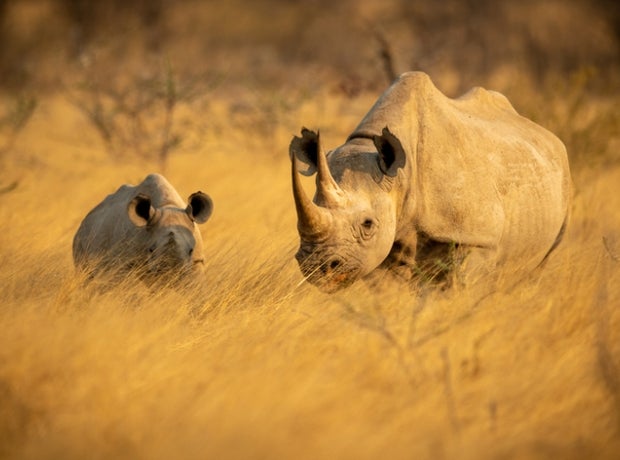
GEF support for conservation finance has played a key role in encouraging international collaboration for widespread, lasting impacts. One key example is the Wildlife Conservation Bond or "rhino bond," issued by the World Bank with funding and support from the Global Environment Facility. This was a game-changing innovation that has directed funding to nature reserves and protected areas in South Africa. It is an example of how thinking out of the box and collaborating across institutions can result in an attractive investment opportunity that can be scaled for wide benefit. This initiative is now being replicated in other places to protect additional wildlife species and habitats.
Another example is the Risk Mitigation Instrument for Land Restoration project, implemented by the Inter-American Development Bank, a combined GEF investment of $15 million with $120 million in co-financing to restore degraded lands in Latin America. These investments have supported sustainable management for ecosystem services, such as through landscape regeneration, inter-cropping, shade-grown systems, high-value forest products, and silvo-pastoral systems.
Blended finance from the GEF is also addressing some of the main barriers for private sector investment in nature, including small project sizes, heterogeneous project types, and a lack of an enabling environment. Through the Coalition for Private Investment in Conservation (CPIC), launched in 2016, the GEF is working with the Rockefeller Foundation and other partners to increase deal flow into global priority conservation projects. The CPIC Conservation Finance Initiative is focused on scaling up and demonstrating the value of blended finance in conservation with financial blueprints developed with experienced investors and banking institutions alongside experts in on-the-ground project design in biodiversity and natural resources management.
The GEF has also joined the International Monetary Fund in the development of country platforms to catalyze climate finance in Madagascar, Benin, and Côte d'Ivoire. These initiatives, also bringing together development banks, international financial institutions, the private sector, and other development partners, are working to attract significant funding, leverage innovative financing mechanisms, and foster collaboration between governments, international financial institutions, and the private sector at a new scale.