Main Issue
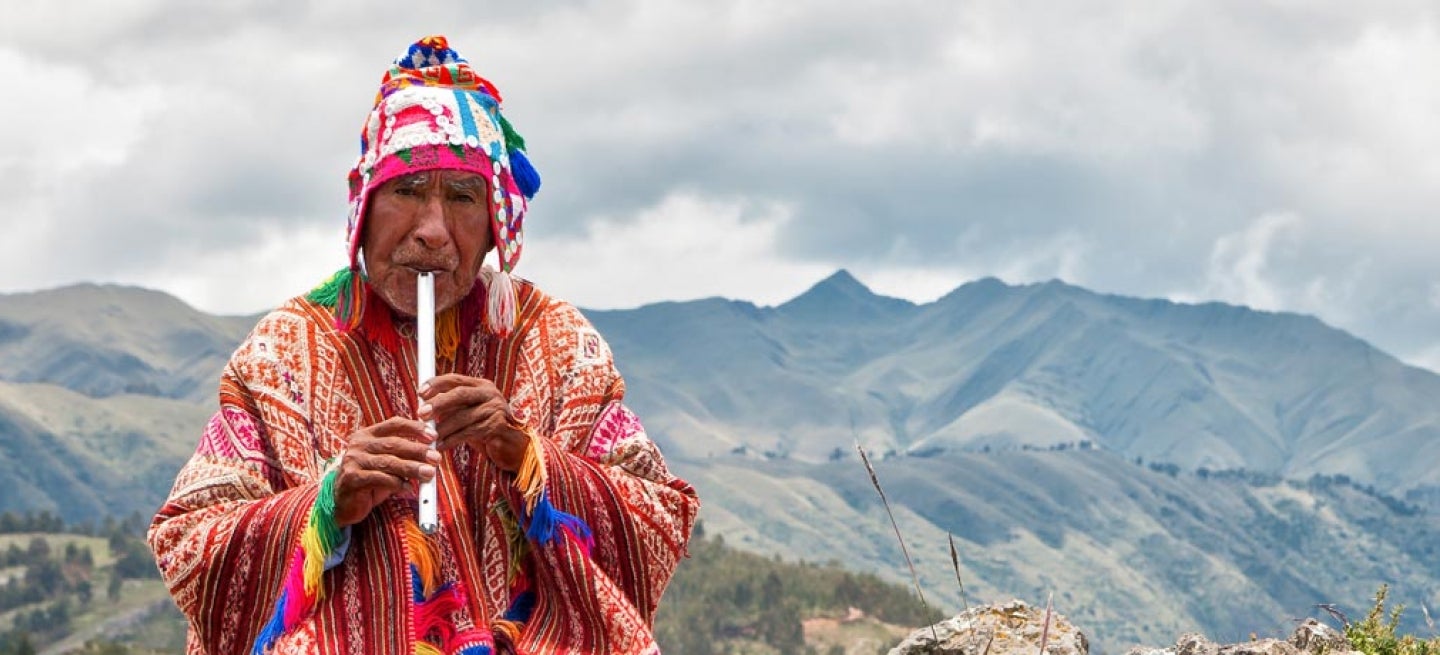
Indigenous Peoples and local communities (IPLCs ) manage nearly a quarter of the Earth’s surface and vast ocean areas that, together, hold 80% of the Earth's biodiversity. In addition, IPLCs have full legal tenure of lands that contain an estimated 37.7 billion metric tons of carbon. This presents both enormous challenges and opportunities for the environment and Indigenous Peoples themselves.
The efforts of Indigenous Peoples to maintain their territories have been critically important in providing global environmental benefits. Given their inextricable bond to the land, any loss of natural resources threatens their identity and affects their communities. But Indigenous Peoples are not only victims of a deteriorating global environment: they are also agents of change and a source of effective solutions.
The rich traditions and bountiful knowledge of Indigenous Peoples can help the world cope with changing environmental patterns and conditions. And since they are often disproportionately affected by climate change, efforts to conserve biodiversity can also strengthen their economic and cultural resilience.
What We Do
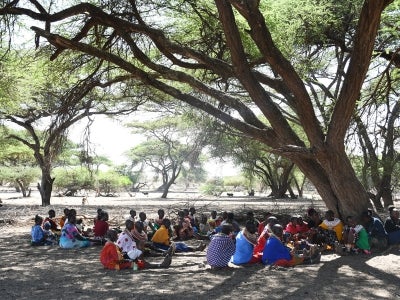
The GEF has been working in partnership with Indigenous Peoples since its inception in 1991. We were one of the first international financial institutions to develop an independent policy to engage with civil society, including Indigenous Peoples. This policy provides the basis for participation of Indigenous Peoples in all aspects of our work.
Over a decade ago, the GEF worked with Indigenous Peoples to create an advisory group (IPAG) that provides them with formal and informal guidance to the GEF’s policies, procedures, strategies, and the realities of their implementation. We are tremendously grateful for the guidance of IPAG members since then and take it as a good sign that other institutions have adopted this approach.
In recent years, the GEF has enhanced its partnership with Indigenous Peoples in various ways. We have adopted Principles and Guidelines for Engagement with Indigenous Peoples. We have also developed the GEF Policy on Agency Minimum Standards on Environmental and Social Safeguards (which includes a minimum standard dedicated to Indigenous Peoples and which requires Free, Prior, and Informed Consent for all GEF projects with the potential to affect Indigenous Peoples). These standards also address considerations for Indigenous Peoples in voluntary isolation and initial contact.
Our work is guided by the United Nations Declaration on the Rights of Indigenous Peoples (UNDRIP). As the financial mechanism of the Rio Conventions and other multilateral environmental agreements, the GEF also recognizes the importance of working in partnerships with Indigenous Peoples, respecting their rights, and protecting the land and resources upon which they depend.
At the 11th Conference of the Parties, for example, the Convention on Biological Diversity (CBD) invited the GEF to help IPLCs build capacity to participate in legal, policy, and decision-making processes. The GEF also assists IPLCs to build their capacity and traditional knowledge related to genetic resources for the implementation of the Nagoya Protocol on Access and Benefit-Sharing.
For its part, the United Nations Framework Convention on Climate Change (UNFCCC) has stipulated that National Adaptation Plans (NAPs) should include Indigenous Peoples in all stages — from design and implementation to monitoring and evaluation. The GEF supports NAPs through its climate change adaptation focal area.
Results
Between 1991 and 2014, the GEF actively involved Indigenous Peoples in more than 220 medium- and full-size projects. In addition, the GEF Small Grants Program (SGP), often regarded as direct funding to Indigenous Peoples by Indigenous Peoples themselves, also supported 2,300 projects.
Biodiversity conservation continues to dominate among projects with Indigenous Peoples. However, in recent years, Indigenous Peoples have been increasingly involved in other GEF focal area projects, such as climate change adaptation and sustainable forest management. Outcomes from these projects include improved policies related to Indigenous Peoples; enhanced co-management of protected areas; adoption of sustainable and integrated natural resource management; and strengthened institutions, capacity, and skills, and knowledge development.
In response to recommendations from IPAG, Indigenous Leaders, and the UN Permanent Forum on Indigenous Issues, the GEF developed the Inclusive Conservation Initiative (ICI) 1.0 to provide direct funding to Indigenous Peoples’ organizations. Indigenous leaders have recognized ICI 1.0 as a model for other donor organizations.
In 2024, ICI 1.0 successfully secured $14.5 million in direct access agreements across 10 Indigenous-led initiatives in 12 countries. These agreements range from $1-2 million per project. The adaptable, learning-by-doing approach of ICI 1.0 illustrates the potential of financial resources to promote sustainable and scalable conservation models.
ICI 1.0 is guided by a Global Steering Committee composed entirely of Indigenous leaders from the grantee organizations. This approach ensures that Indigenous perspectives and leadership inform the decision-making process. The structure enhances project outcomes and reinforces the principle that Indigenous Peoples and their knowledge systems, embedded with nature, are essential to global conservation efforts.
Due to the success of ICI 1.0 and the significant interest it generated, the GEF launched ICI 2.0 in 2024 as part of the GEF-8 replenishment cycle (from 2022-2026). Within ICI 2.0, the Heart of Conservation Initiative has a $22.5 million budget and attracted more than 800 expressions of interest in 2025.
At the core of our newest funding mechanism, the Global Biodiversity Framework Fund (GBFF), is a commitment to inclusive and equitable engagement. The GBFF aims to allocate at least 20% of its programming to IPLCs. To that end, one of its six project selection criteria is explicit engagement with Indigenous Peoples.
In Brazil, for example, the GBFF approved the “Ywy Ipuranguete” initiative, meaning “Beautiful Land” in the Tupi-Guarani language. This project will support management of 15 Indigenous territories across diverse biomes encompassing 6 million hectares. In all, it will benefit more than 57,000 Indigenous Peoples across the Amazon, Atlantic Forest, Cerrado, Caatinga, and Pantanal biomes.
Additionally, the GEF family of funds has a significant focus on supporting Indigenous Peoples across all areas of work. These activities range from reducing mercury use in artisanal and small-scale gold mining… to creating value chains for sustainably produced products… to supporting co-management of protected areas and traditional management of fisheries. In 2025, the GEF also partnered with the Minamata Convention Secretariat to support the meaningful participation of Indigenous Peoples in addressing mercury pollution and side effects.
Looking Ahead
In GEF-9 (2026-2030), under the umbrella of a whole-of society approach, the GEF will work with IPLCs, national governments, non-governmental organizations, and others. Together, we will strengthen the capacity of IPLCs to conserve biodiversity and to strengthen their work and practices that support the world in bringing global environmental benefits. GEF-9 aims to allocate 10% of resources to civil society organizations, including IPLCs.
GEF projects funded with the regional/global set aside will continue to focus on a broad range of geographies and ecosystems that are home to IPLCs. Such ecosystems contribute significantly to global biodiversity conservation and bring global environmental benefits both to IPLCs and the world.
As the GEF collates lessons to improve its work with IPLCs, it is developing guidelines to measure financial flows that support the actions of IPLCs. This process, which aims to improve transparency and accountability, engages the IPAG, the International Indigenous Forum on Biodiversity, Indigenous leaders, the CBD, and other key actors.
Project investments will focus on:
- site-based conservation projects that are led by IPLCs
- sustainable and direct financing of IPLC-driven environmental projects in a broader range of topics beyond biodiversity
- capacity development for IPLC organizations and integration of diverse knowledge systems to achieve conservation and sustainable natural resource management outcomes
- capacity development of Indigenous women and youth, recognizing their pivotal role in leading projects and initiatives that benefit them and the world to achieve global environmental benefits.
Related Topics



Indigenous Peoples Advisory Group
In September 2012, the GEF established an Indigenous Peoples Advisory Group (IPAG) to provide guidance and advice to the GEF on all matters relevant to Indigenous Peoples and the activities of GEF. In particular, it aimed to enhance dialogue among Indigenous Peoples, the GEF Secretariat and its partner agencies, and other experts.
The current members of IPAG are:
- Giovanni Reyes, President, Philippines ICCA Consortium, representing Asia (IPAG Chair)
- Alisi Rabukawaqa, Independent Consultant, representing Small Island Developing States (IPAG Deputy Chair)
- Aliou Mustafa, Coordinator of Indigenous Peoples and Rural Development Association INPRUDEV in Cameroon (representing Africa)
- Viviana Figueroa, Member of the Indigenous Women's Network on Biodiversity of Latin America and the Caribbean/International Indigenous Forum on Biodiversity (representing Latin America and the Caribbean)
- Galina Angarova, Executive Director, SIRGE Coalition, Independent Expert (independent advisor)
- Carlos Perez-Brito, Senior Social Development Specialist, World Bank (GEF Agency Representative)
- Terence Hay-Edie, Program Advisor, United Nations Development Programme (GEF SGP Representative)
The work of IPAG is supported by Tania Eulalia Martinez-Cruz, Indigenous Peoples’ focal point, and Sarah Wyatt, Senior Biodiversity Specialist at the GEF Secretariat.
What Does IPAG Do?
Since the formation of IPAG in 2012, IPAG members have served in a voluntary capacity to support a variety of activities, including the following:
- Playing a key role in the planning and design of the Inclusive Conservation Initiative and Heart of Conservation Initiative, which aim to empower IPLCs to deliver GEBs through access to larger resources required for larger-scale biodiversity conservation, and natural resource management activities.
- Providing significant input to key GEF policies, such as the GEF Policy on Agency Minimum Standards on Environmental and Social Safeguards. Within this key document, IPAG members were involved in the development and design of a minimum standard dedicated to Indigenous Peoples.
- Promoting GEF interests and programs relating to Indigenous Peoples through planning and implementing side events and workshops at key international conventions and fora, including the Convention on Biological Diversity, UNFCCC, and World Conservation Congresses of the International Union for Conservation of Nature.
- Raising awareness among Indigenous Peoples on opportunities for engagement with the GEF and facilitating this involvement wherever possible.
- Providing advice and guidance to the GEF CEO and Secretariat staff on issues relating to Indigenous Peoples and voluntary funds such as the GBFF.
- Engaging with GEF agencies through the UN Inter-Agency Support Group on Indigenous Peoples (IASG), including through exchange of lessons from programs and projects on access to finance.
- Providing guidance on financing options for Indigenous Peoples and on key issues such as monitoring and evaluation metrics.
- Engaging as observers in the GEF Council and, since 2025, as observers in the replenishment process. In these roles, they voice opinions on decisions that affect priorities for the GEF-9 cycle and ensure IPLCs participate in a more meaningful way.
The GEF expresses appreciation to former IPAG members for their valuable contributions:
- Lucy Mulenkei
- Yolanda Teran
- Gonzalo Oviedo
- Johnson Cerda
- Luis Felipe Duchicela
- Mrinalini Rai
- Legborsi Saro Pyagbara
- Thomas Jalong
- Yeshing Upún