Healthy transboundary marine and freshwater ecosystems are essential for sustaining life and achieving global, social, and economic goals, including many UN Sustainable Development Goals. These ecosystems face mounting threats from human activities and natural pressures—such as over-abstraction, pollution, unsustainable fishing, invasive species, commercial exploitation, and climate change—which are causing alarming losses in aquatic biodiversity and undermining the sustainability of vital ecosystem services.
The Global Environment Facility international waters (IW) focal area has a unique mandate: to support transboundary cooperation in shared marine and freshwater ecosystems. As the world’s largest funding mechanism for multi-country collaboration on freshwater and ocean issues, the GEF brings together both recipient and non-recipient countries to address these critical challenges. Through GEF IW support, nations have successfully negotiated regional cooperation frameworks, treaties, and protocols that reduce threats and foster sustainable resource use across sectors and borders. These achievements are often the result of regional participatory and collaborative processes that identify major ecological, economic, and social challenges and opportunities. Action plans developed from these processes set common priorities for policy reforms and investments at both regional and national levels. GEF IW investments promote integrated, cross-sectoral approaches, engaging public and private sectors, civil society, non-governmental organizations, and international institutions, and operate at multiple scales—from local communities to national governments—across transboundary watersheds.
Our Work
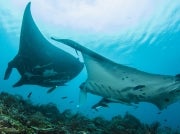
Strengthening Sustainable Management in Shared Coastal and Marine Ecosystems
The GEF enhances the sustainable management of coastal and marine ecosystems through multi-country cooperation in large marine ecosystems. This includes supporting sustainable initiatives in blue economic sectors, mitigating the impacts of ocean extractive industries, and promoting policy coherence to address land-based pollution. The GEF also focuses on establishing sustainable financing mechanisms, promoting transparency through marine spatial planning, and supporting global conservation efforts such as 30x30. Additional priorities include filling ocean data gaps, aligning marine priorities with national commitments, protecting and restoring key ecosystems, and promoting nature-based solutions and blue carbon inventories. Sustainable fisheries management is advanced by piloting and scaling initiatives, reducing harmful subsidies, addressing illegal, unreported, and unregulated fishing (IUU), promoting market mechanisms, filling fisheries data gaps, and supporting climate-resilient management planning. Sustainable aquaculture practices are also supported to ensure long-term marine resource health.

Improving Management in Areas Beyond National Jurisdiction (BBNJ)
As of June 2023, the GEF serves as part of the financial mechanism for the BBNJ Agreement, which also includes a special fund and a voluntary trust fund. Until the BBNJ Agreement enters into force, GEF support is focused on providing assistance to countries for ratification and implementation readiness.

Enhancing Water Security in Freshwater Ecosystems
The GEF supports countries in establishing and strengthening multi-country cooperation in freshwater systems, filling data gaps, supporting information sharing, and reinforcing regional legal and institutional frameworks. GEF support fosters intersectoral policy coherence, boosts climate resilience, and aligns with national commitments for sustainable ecosystem management. Innovative financing mechanisms are facilitated to support regional institutions and investments beyond project lifetimes, including leveraging private sector finance. The GEF IW focal area also addresses governance and management gaps in groundwater by supporting legal and institutional frameworks for transboundary aquifer cooperation, integrating groundwater management into river basin strategies, and providing tools to prevent over-pumping and contamination.
Knowledge Management
IW:LEARN, the GEF International Waters Learning Exchange and Resource Network, promotes global experience sharing among GEF-financed international waters projects, country officials, and partners.